
An AI that answers the restaurant phone and puts the order on the kitchen screen
A multi-tenant SaaS for Australian restaurants: phone orders taken by an AI voice agent, mirrored into a live orders board, call log and kitchen display, with self-serve signup and subscription billing.
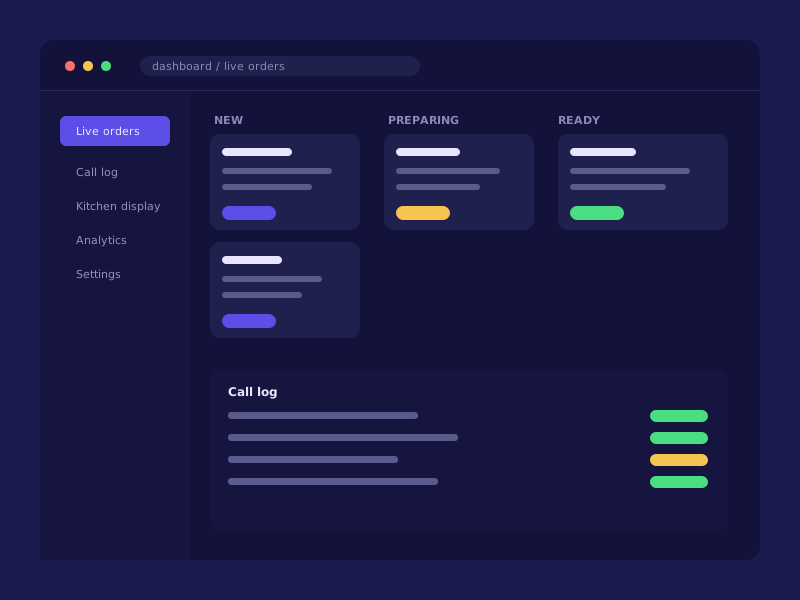
Running with a pilot restaurant
3 roles: platform admin, owner, staff
Live orders board with realtime updates
GST-inclusive AUD pricing
The challenge
A restaurant's phone rings hardest when nobody can answer it. During service the people who could pick up are plating food or serving tables, so the call goes unanswered and the order goes to a competitor or a delivery app that takes a commission. Hiring someone just to answer the phone does not make sense for a small venue, and a voicemail is not an order. The brief was a system that answers every call, takes a pickup order against the venue's real menu, and makes sure the kitchen actually sees it, without new hardware and without needing the owner to be tech-savvy. It also had to be a product that could serve many restaurants, not a one-off for a single venue, which meant strict separation between each venue's data from the first line of code.
What we built
- A multi-tenant platform with owner, staff and platform-admin roles, and database-level row security on tenant data so one restaurant can never read another's orders.
- Phone ordering driven by a voice agent, with GoHighLevel as the system of record for voice, SMS and order automation. Orders and calls are mirrored into our own database from verified webhooks.
- A live orders board that updates in real time. Staff acknowledge an order and advance its status, and each change is pushed back to the order's pipeline stage so both systems agree.
- A call log with recordings streamed through our server, so access tokens never reach the browser, and a call-by-call history for resolving disputed orders.
- A kitchen display mode and analytics built from real order and call data, plus settings for business hours and an escalation phone number.
- Self-serve signup that creates the venue, starts a Stripe subscription and triggers provisioning, with an admin view of every tenant, a retry for failed provisioning, and audited impersonation for support.
- Webhook authentication with a shared secret, and a written feature audit that records exactly what is confirmed against the live service and what is still an assumption.
What it makes possible
A venue's phone orders no longer depend on someone being free to answer. Calls are answered, orders land on a live board and a kitchen screen, and each call is recorded and logged so an owner can check what was said. The platform is running with a pilot restaurant in Australia, and the architecture is built to onboard further venues: each one gets its own isolated data, its own subscription and its own provisioning, managed from a single admin console. Just as important is what we learned about depending on third-party platforms: we verify each integration against the live service rather than the documentation, and keep a running record of what has been proven. That discipline is what turns a voice-AI demo into something an owner can rely on during a Friday-night rush.
Built with
Next.js 16, TypeScript, Supabase (PostgreSQL, row-level security, Realtime), Stripe, GoHighLevel, Vercel
Related work
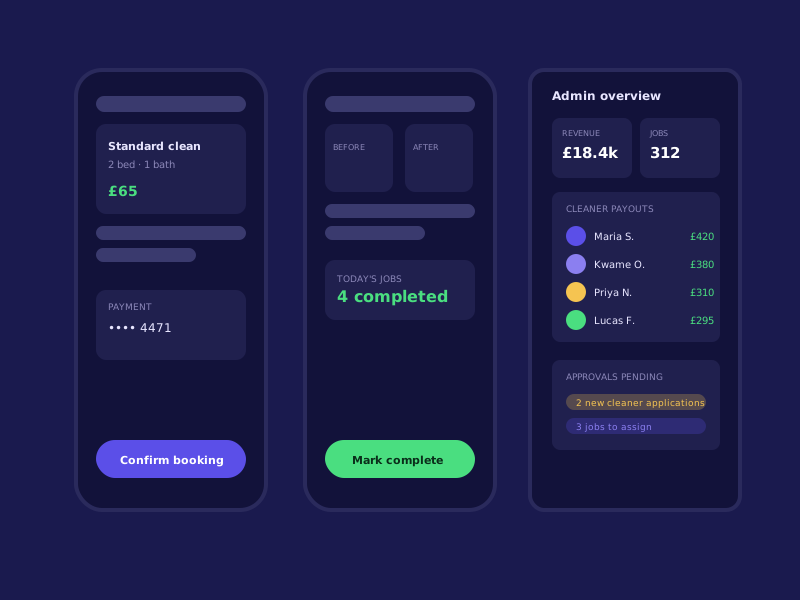 Delivered
Cleaning marketplace
Customer app, cleaner app and admin CRM with upfront payment and photo proof
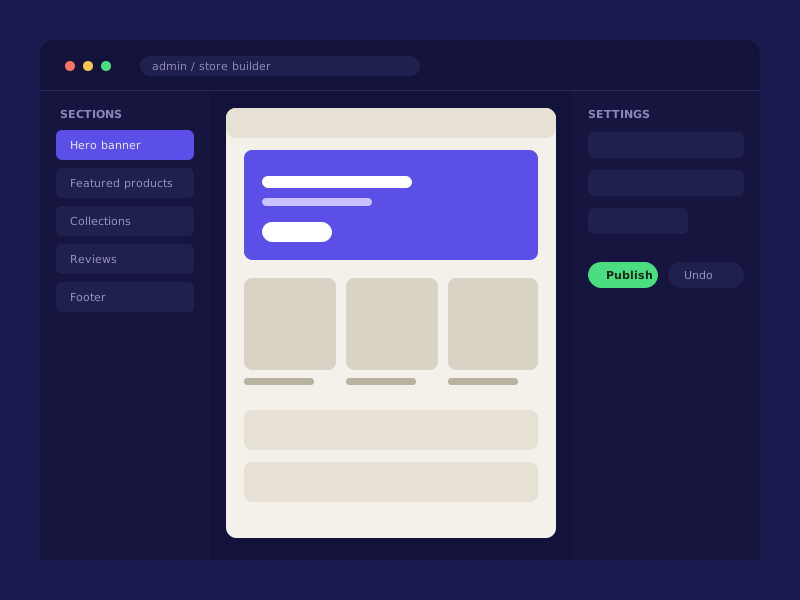 Live
BizTrackBD ecommerce platform
A multi-tenant store builder for Bangladesh: cash on delivery, bKash and Nagad, local couriers and fake-order protection
Let’s look at how your business runs today.
A 30-minute call with our founder. No pitch. Just where things get stuck and whether a system would fix it.
Book a Discovery Consultation