
The honest range is 4 to 10 weeks — here's what actually determines where your project falls, phase by phase, and what makes a build run longer than planned.
- Core Focus: Working With Us
- Estimated Reading Time: 4 min read
- Author & Technical Review: The Digital Dude Team
The honest answer: 4 to 10 weeks, depending what you're building
There's no single answer to "how long does custom software take," and anyone who gives you one number without knowing what you're building is guessing. But there is a real, honest range: across the projects we scope, builds typically run 4 to 10 weeks from kickoff to launch, and which end of that range you land on depends almost entirely on the type of system, not on how good the development team is.
Here's what actually determines where your project falls, and what happens in each phase.
Why the range is so wide
A custom CRM built around one internal team's workflow (4-6 weeks) and a three-sided marketplace with separate customer, provider and admin apps (6-10 weeks) are not the same size of project, even though both get called "custom software." The pricing post breaks down the same categories from a cost angle — timeline and cost move together for a simple reason: both are driven by how many distinct workflows and user types the system actually has to serve.
A system with one type of user and one core workflow is inherently faster to build and test than one with five different portals, external payment integrations, and multi-role permissions. That's not a team being slow — it's more surface area that genuinely needs building and testing.
What happens in each phase
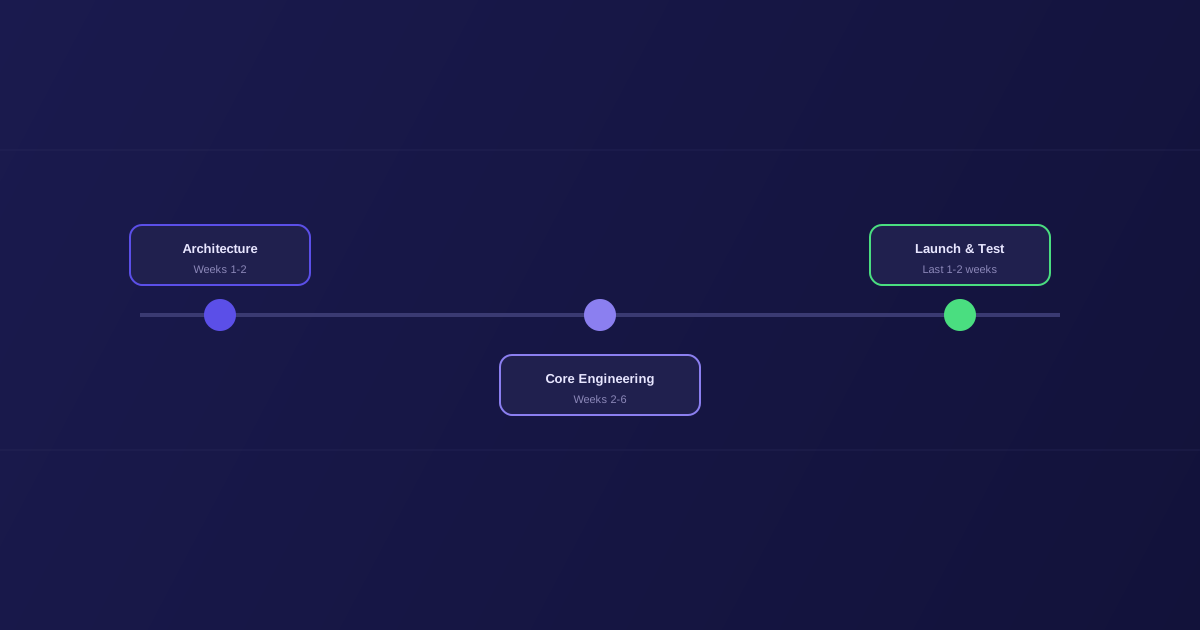
Weeks 1-2: Architecture and wireframing. Before any code gets written, we agree the database schema, the user flows, and — critically — what's in scope and what isn't. This phase feels slow if you're eager to see something working, but skipping it is the single biggest cause of projects that run long: it's much cheaper to change a wireframe than to rebuild a working feature that turned out to solve the wrong problem.
Weeks 2-6 (the bulk of the timeline): Core engineering. The actual system gets built — database, authentication, the core workflows, admin tooling. This is where the CRM/SaaS/marketplace/ERP distinction matters most, because this phase scales directly with how many distinct pieces there are to build.
The last 1-2 weeks: Integrations, testing, and launch. Third-party connections (payment, WhatsApp/SMS, accounting exports), end-to-end testing, and production deployment. This is also usually where you get your first real look at the finished system if you haven't been seeing progress along the way.
What makes a project run longer than its estimate
Scope changing mid-build. Adding a genuinely new feature after architecture is locked in is the single most common cause of a project running past its original timeline — not because the new feature is hard, but because it wasn't accounted for when the schema and workflows were designed.
Waiting on your side. Feedback on a demo, access to existing data for migration, or a decision on a design direction — every day spent waiting for an answer is a day added to the calendar, even though no development time was lost.
Underestimating integration complexity. A payment gateway or a WhatsApp Business API integration sounds like "just add the button" from outside, but each one is a real piece of engineering with its own edge cases (failed payments, webhook reliability, rate limits) that need proper handling, not just a happy-path demo.
What doesn't have to slow you down
You don't need a finished brief to start. As covered in what a discovery call actually needs, a clear problem statement is more useful at the start than a fully-specified feature list — the architecture phase is partly where that gets worked out together.
A phased launch is often faster to value, not slower overall. Shipping the core workflow first and layering in reporting or automation afterward means you're using something real within the first phase, rather than waiting for every feature before anything goes live.
The realistic way to think about it
If you're evaluating whether custom software fits your timeline at all: a single-workflow internal tool is realistically a 4-6 week commitment from a standing start, and anything involving multiple user types, marketplace dynamics, or heavy integration work should be planned as 6-10 weeks. Neither of those numbers moves much based on which agency you pick — they move based on what you're actually asking to be built.
Want a real timeline for your specific project? [Book a 30-minute call](/contact) and we'll give you an honest estimate after we understand what you actually need.
The Digital Dude Team
Verified AuthorTechnical LeadAuthored and reviewed by senior engineering practitioners at The Digital Dude. Specializing in high-performance web architecture, scalable databases, programmatic SEO, and enterprise conversion systems.
Need expert execution for Working With Us?
Whether you are migrating from legacy tooling or architecting custom infrastructure, our UK-based engineers will design a high-converting solution tailored to your workflow.